Perspectives in Psychology
How do psychologists use different lenses to explain the same behavior without confusing a perspective with a method?
The Core Idea
A psychological perspective is a way of explaining behavior and mental processes. The same behavior can be explained from different angles, and each angle highlights different causes.
Good AP writing does not list every perspective. It chooses the perspective that matches the evidence in the prompt and explains the link clearly.
Perspectives at a Glance
| Perspective | Main Focus | Scenario Clue |
|---|---|---|
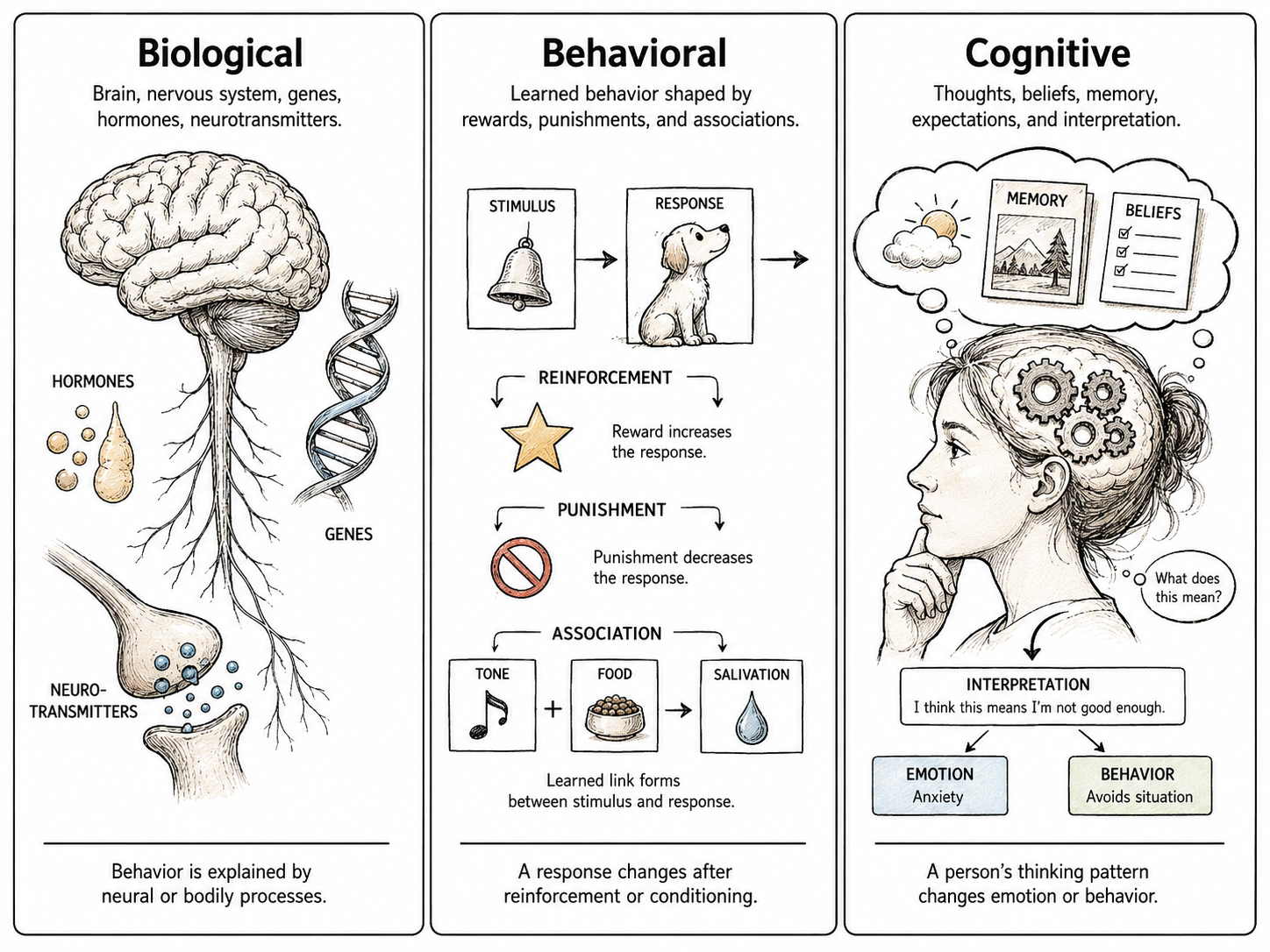
| Biological | Brain, nervous system, genes, hormones, neurotransmitters. | A behavior is explained by neural or bodily processes. |
| Behavioral | Learned behavior shaped by rewards, punishments, and associations. | A response changes after reinforcement or conditioning. |
| Cognitive | Thoughts, beliefs, memory, expectations, and interpretation. | A person's thinking pattern changes emotion or behavior. |
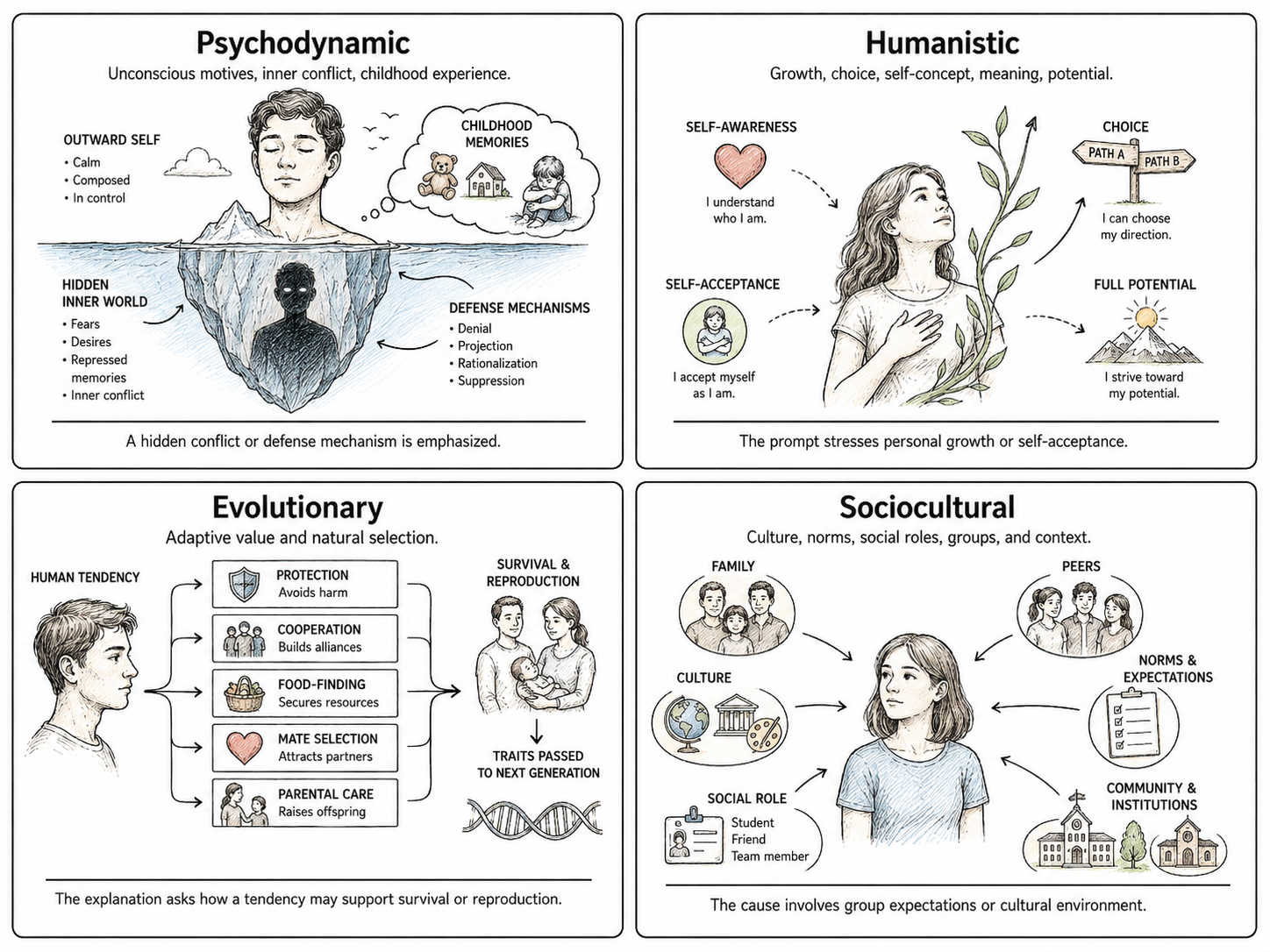
| Psychodynamic | Unconscious motives, inner conflict, childhood experience. | A hidden conflict or defense mechanism is emphasized. |
| Humanistic | Growth, choice, self-concept, meaning, potential. | The prompt stresses personal growth or self-acceptance. |
| Evolutionary | Adaptive value and natural selection. | The explanation asks how a tendency may support survival or reproduction. |
| Sociocultural | Culture, norms, social roles, groups, and context. | The cause involves group expectations or cultural environment. |
Biopsychosocial Model
The biopsychosocial model explains behavior through interacting biological, psychological, and social-cultural influences.
| Layer | What It Includes | Stress Example |
|---|---|---|
| Biological | Genetics, brain systems, hormones, arousal, sleep, health. | High arousal and poor sleep make stress feel stronger. |
| Psychological | Thoughts, expectations, memory, coping, personality, learning. | The student interprets one bad grade as proof of failure. |
| Social-cultural | Family, peers, school, culture, discrimination, resources. | Pressure from family and school increases the burden. |
Use this model when the prompt includes more than one level of influence. It prevents thin one-cause answers.
Perspective vs Method
A perspective explains. A method collects evidence. They can be paired, but they are not the same thing.
| Question | Perspective Answer | Method Answer |
|---|---|---|
| Why might the behavior happen? | Because thoughts, learning, biology, culture, or unconscious motives shape it. | Not a method question. |
| How will researchers study it? | Not a perspective question. | Experiment, survey, case study, observation, correlation. |
| Example | A cognitive explanation focuses on a student's beliefs about failure. | A survey measures how often students report those beliefs. |
Scenario Clue Grid
| If the Prompt Mentions... | Think... | Why |
|---|---|---|
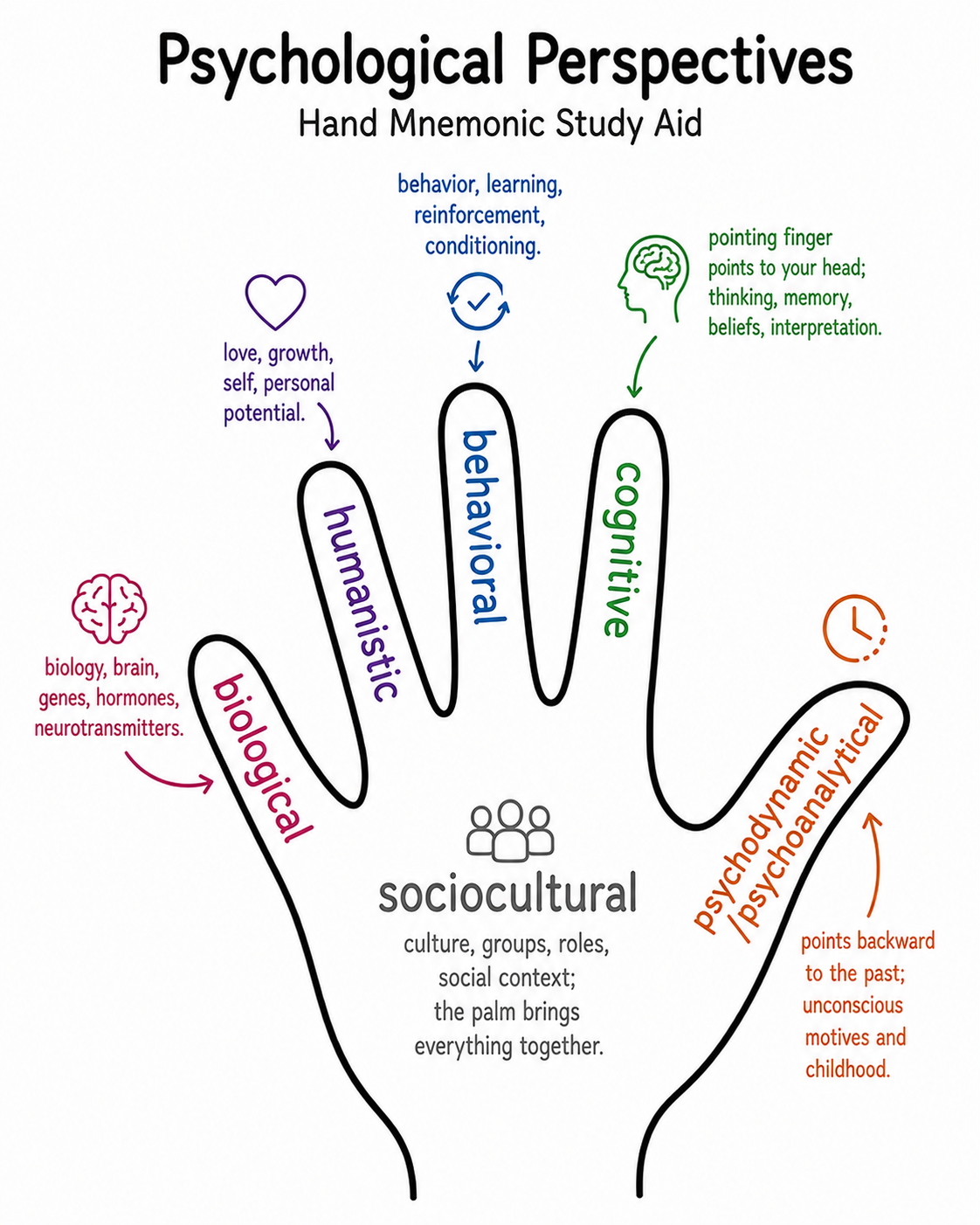
| Reward, punishment, association. | Behavioral. | Behavior changes through learning history. |
| Beliefs, expectations, memory, interpretation. | Cognitive. | Mental processing shapes behavior. |
| Brain area, hormone, neurotransmitter, genes. | Biological. | Body systems are the explanation. |
| Norms, cultural expectations, social role. | Sociocultural. | Context and group influence are central. |
| Choice, growth, self-worth. | Humanistic. | The explanation centers personal meaning and potential. |
| Unconscious conflict or childhood roots. | Psychodynamic. | Hidden motives or early experience are emphasized. |
Applying Multiple Perspectives
For a behavior like test anxiety, a biological explanation might discuss arousal, a cognitive explanation might discuss catastrophic thoughts, a behavioral explanation might discuss avoidance being reinforced, and a sociocultural explanation might discuss family or school expectations.
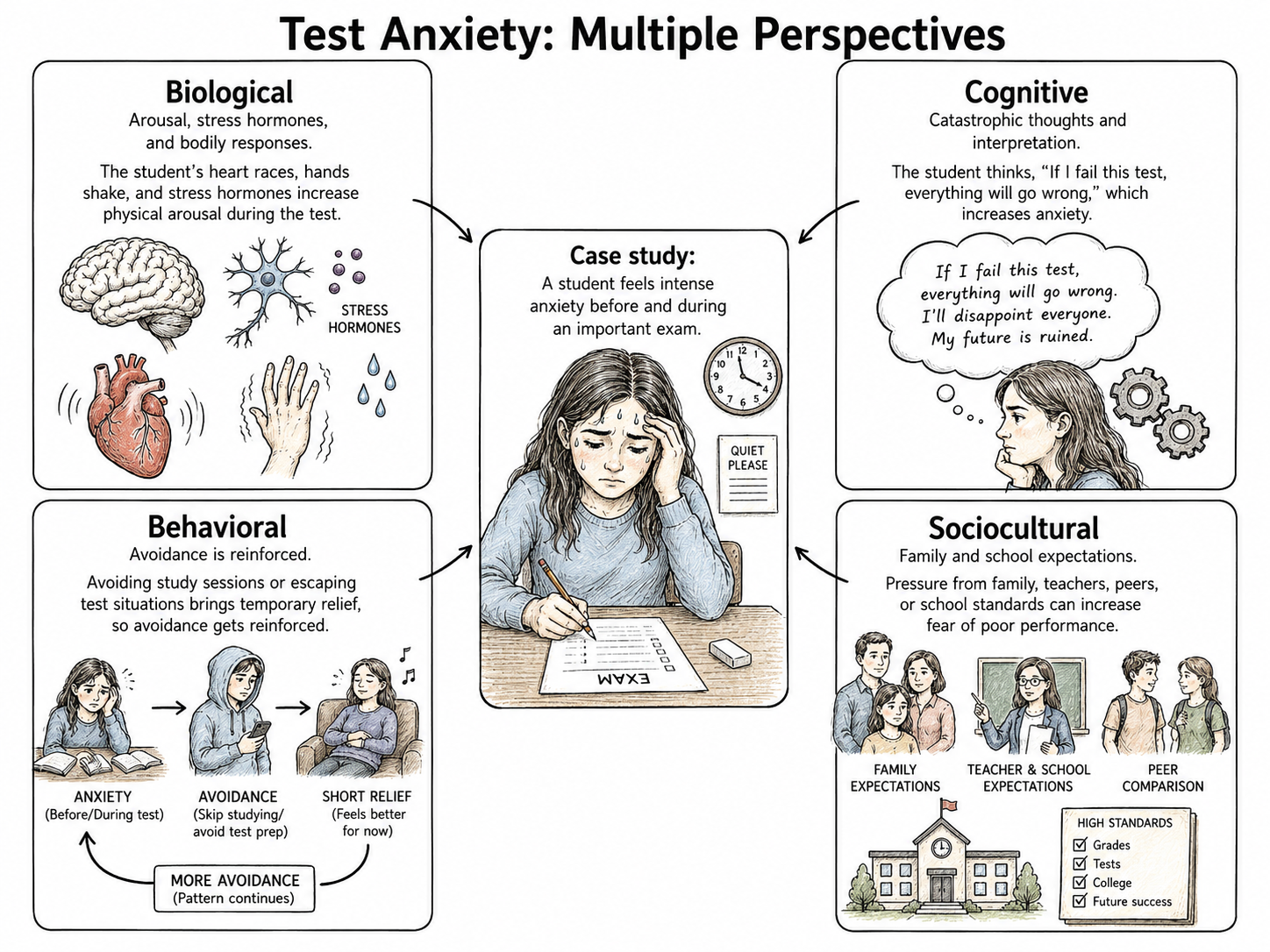
The stronger answer does not say all of those at once. It chooses what the prompt supports, then explains the evidence-to-perspective match.
Vocabulary
- Perspective: A lens for explaining behavior and mental processes.
- Biological perspective: Explains behavior through body systems.
- Behavioral perspective: Explains behavior through learning.
- Cognitive perspective: Explains behavior through mental processes.
- Psychodynamic perspective: Explains behavior through unconscious motives and conflict.
- Humanistic perspective: Explains behavior through growth, choice, and self-concept.
- Evolutionary perspective: Explains behavior through possible adaptive value.
- Sociocultural perspective: Explains behavior through culture and social context.
- Biopsychosocial model: Explanation using biological, psychological, and social-cultural levels together.
Common Traps
- Method trap: A survey, experiment, or observation is not a perspective.
- One-cause trap: Many behaviors are better explained through interacting influences.
- Behavioral/cognitive trap: Behavioral focuses on learning history; cognitive focuses on thoughts and interpretation.
- Evolution trap: Adaptive explanation is not moral approval and not destiny.
- Psychodynamic trap: Do not use it unless unconscious motives or early conflict are central.
Quick Check
You are ready when you can identify the perspective in a scenario, explain why the clue fits, and separate explanation lenses from research methods.